
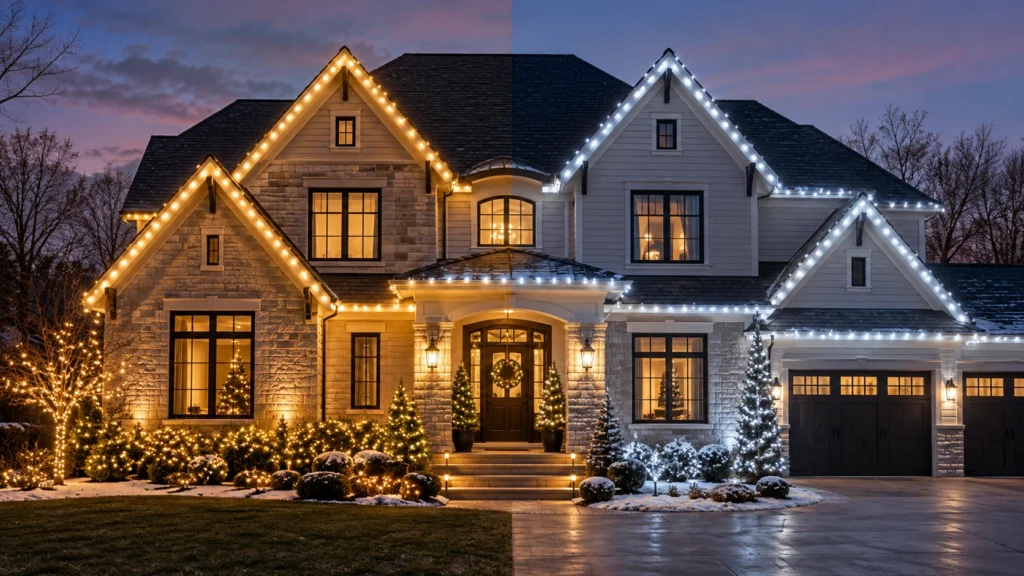
Two displays can use the same number of lights yet look completely different after sunset. One reason is the shade of white. Warm white, neutral white, and cool white are not always standardized across brands, so the name on a product box alone cannot guarantee a perfect match. A thoughtful color selection considers your siding, masonry, roof color, landscaping, and the mood you want your Cumming-area home to create.
What the white-light labels usually mean
Warm white often appears softer and more golden, while cool white generally has a brighter bluish appearance. Neutral white sits somewhere between. Manufacturers may use correlated color temperature measured in kelvins, but the visual result also depends on the LED package, lens, output, and surrounding colors. Compare real sample bulbs at night whenever possible instead of relying entirely on marketing photographs.
Coordinate the white tone with exterior materials
Warm white can complement brick, natural stone, wood details, and traditional holiday wreaths. Cooler tones can reinforce crisp architectural lines or certain modern exteriors, but can also make nearby warm-white garland look mismatched. Dark roofs, painted trim, and exterior floodlights affect the perceived color. The best option is the one that looks intentional beside the home’s existing lighting.
Choose one consistent backbone
For a classic design, select one primary white tone for the main roofline and large architectural accents. If you plan to add trees, garland, or wreath lights, use matching or deliberately complementary products. Mixing unrelated white tones across every zone can create a patchwork appearance, even when all the bulbs technically function correctly.
Use color accents with a defined purpose
Red, green, blue, or multicolor elements work best when they are positioned intentionally. A colored tree, one entry feature, or a small group of shrubs can create a festive focal point without competing with the roofline. Decide whether you want a traditional neighborhood look, an understated architectural display, or a playful family theme before selecting products.
Check nighttime visibility from practical viewpoints
Walk to the normal street-facing viewing position and consider how headlights, streetlights, and neighboring homes influence the display. Very bright bulbs may create glare near front windows or sidewalks. A sample section installed at a safe, accessible height can reveal color mismatches that are easy to miss indoors.
When comparing warm white vs. cool white Christmas lights, start with the look of the property rather than a bulb label alone. The Christmas light design guide describes how color fits into an overall display, and the Cumming service overview explains local project planning.
Before you request a lighting estimate
- Ask to see a real sample of the proposed white LED tone.
- Choose a primary roofline tone before adding landscape accents.
- Check whether different decorative elements use matching lamps.
- Evaluate the display from the driveway and street after dark.
Frequently asked question
Can I combine warm white roofline lights with colored trees?
Yes. A consistent warm-white architectural outline with restrained colored accents is a common way to add variety while retaining visual hierarchy.
Additional local planning resources
For more detail, read Project Gallery and Residential Lighting Service.
Planning a holiday display in Cumming or nearby Forsyth County? For an installation quote based on your property, request a free estimate from Holiday Haven. Final services, availability, and project terms depend on the written proposal.